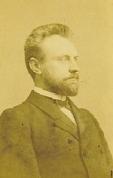
Showing posts with label herman bavinck. Show all posts

Tuesday, October 23, 2012

Seven, Sloth, and Bavinck


The movie, Seven, starring Brad Pitt and Kevin Spacey, has got to be one of the most tragic movies that has ever been made to pass before my eyes. It showcases this serial killer (Kevin Spacey) who goes about snuffing the life out of those he deems as prime incarnations of each of the classic "seven deadly sins." The movie concludes with the protagonist (Brad Pitt) putting a bullet in the antagonist's head, thereby giving the latter his desired ending, i.e., having the former succumb to rage (one of the seven deadly sins) and, consequently, suffer the legal consequences of extra-judicial killing (as if the brutal and grotesque murder of his wife and prenatal baby in the killer's hands was not suffering enough!). Of course, one of the victims was a supposedly slothful man who was tied up on his bed for a year, allowing his inactivity to kill him!

Sloth may be defined as the antithesis of industry, and what I have for you below is Herman Bavinck's theology of work:

Wednesday, October 17, 2012

Better Than a Pre-Fall Adam


Herman Bavinck explains how Adam, in his pre-Fall state, lacked "absolute certainty" regarding his present state of bliss and its continuity, whereas the believer in Christ, now in this present sin-ravaged age, possesses it:

Still, on the other hand, the state of the first man should not be exaggeratedly glorified as is so often done in Christian doctrine and preaching. No matter how high God placed man above the animal level, man had not yet achieved his highest possible level. He was able-not-to-sin, but not yet not-able-to-sin. He did not yet possess eternal life which cannot be corrupted and cannot die, but received instead a preliminary immortality whose existence and duration depended upon the fulfillment of a condition. He was immediately created as image of God, but he could still lose this image and all its glory. He lived in paradise, it is true, but this paradise was not heaven and it could with all of its beauty be forfeited by him. One thing was lacking in all the riches, both spiritual and physical, which Adam possessed: absolute certainty. As long as we do not have that, our rest and our pleasure is not yet perfect; in fact, the contemporary world with its many efforts to insure everything that man possesses is satisfactory evidence for this. The believers are insured for this life and the next, for Christ is their Guarantor and will not allow any of them to be plucked out of His hand and be lost (John 10:28). Perfect love banishes fear in them (1 John 4:18) and persuades them that nothing shall separate them from the love of God which is in Christ Jesus their Lord (Rom. 8:38-39). But this absolute certainty was lacking to man in paradise; he was not, together with his creation in the image of God, permanently established in the good. Irrespective of how much he had, he could lose it all, both for himself and for his posterity. His origin was Divine; his nature was related to the Divine nature; his destiny was eternal blessedness in the immediate presence of God. But whether he was to reach that appointed destination was made dependent upon his own choice and upon his own will.

What then shall we say to these things? If God is for us, who can be against us? He who did not spare his own Son but gave him up for us all, how will he not also with him graciously give us all things? Who shall bring any charge against God's elect? It is God who justifies. Who is to condemn? Christ Jesus is the one who died—more than that, who was raised—who is at the right hand of God, who indeed is interceding for us. Who shall separate us from the love of Christ? Shall tribulation, or distress, or persecution, or famine, or nakedness, or danger, or sword? As it is written, 'For your sake we are being killed all the day long; we are regarded as sheep to be slaughtered.' No, in all these things we are more than conquerors through him who loved us. For I am sure that neither death nor life, nor angels nor rulers, nor things present nor things to come, nor powers, nor height nor depth, nor anything else in all creation, will be able to separate us from the love of God in Christ Jesus our Lord. (Romans 8:31-39)

What a Gospel!


Friday, October 12, 2012

Bavinck Contra NL2K/R2K


In this post, I argue that to be human is to be in need of both natural and special revelation.

In this article, Dr. Cornelis P. Venema discusses Herman Bavinck's view of the image of God. He quotes the following:

In this [Lutheran] theology the lines of demarcation between the spiritual and the worldly, between the heavenly and the earthly, are so sharply drawn that the result is two hemispheres, and the connection between nature and grace, between creation and re-creation is totally denied. The supernaturalist [or dualist] view is still at work here; the image of God stands alongside nature, is detached from it, and is above it. The loss of the image, which renders man totally deaf and blind in spiritual matters, still enables him in earthly matters to do much good and in a sense renders him independent from the grace of God in Christ . . . [In Reformed theology] sin, which precipitated the loss of the image of God in the narrower sense and spoiled and ruined the image of God in the broader sense, has profoundly affected the whole person, so that, consequently, also the grace of God in Christ restores the whole person, and is of the greatest significance for his or her whole life and labor, also in the family, society, the state, art, science, and so forth (RD 2:553–4)

He then makes a footnote comment:

Though it is anachronistic to put it this way, Bavinck offers in his criticism of the Lutheran view of the image of God an insightful assessment of what today is sometimes called the "two kingdom/natural law" view. Bavinck's point is that, just as sin pervasively corrupts all of human life "before God," so God's grace in Christ restores and perfects all of human life under Christ's lordship. To be restored and perfected as an image bearer of God is not to be elevated to a higher plane of supernatural life and existence, but to be perfected in the fullness of natural (that is, creaturely) human life in communion with God.

It is interesting to see how NL2K/R2K owes much to Roman Catholic nature/grace dualism.


Thursday, October 11, 2012

Trueman on Bavinck as Model


I am blessed to own Herman Bavinck's 4-volume "Reformed Dogmatics" and the John Bolt-edited, "The Last Things." And though Cornelius Van Til chides Bavinck for instances of excursions into autonomous reasoning, still the latter's influence on the former is undeniable.

In this short article, Dr. Carl Trueman extols the virtues of Bavinckism.


Sunday, August 28, 2011

The Coolest of the Reformed Cats


Notice the prominent foreheads? A chief requirement of Reformed coolness.

Turretin was probably wearing a wig or decided on the "heavy metal" look—still within the bounds of cool. LOL.


Friday, October 15, 2010

The Presuppositionalism of Herman Bavinck


"The method of theology is established on three foundations (principia). The ultimate source and foundation of revelation is God (principium essendi). God's self-consciousness is conveyed through his self-communication and presented in the world as the external foundation of knowledge (principium cognoscendi externum). With the possibility of conducting science established, the Logos makes reason and intellect possible as the creator of the reality outside ourselves and the laws of thought within us. Scripture, the instrumental cause of theology, bears witness to the fact that revelation proceeds from God before and after the fall. Scripture is revelation itself. Third, the principium cognoscendi internum presupposes the disclosure of divine self-revelation mediated deeply into the human self-consciousness through the illumination of the Holy Spirit. Creation is the foundation for revelation from which proceeds all religious and ethical life. For Bavinck the question is never 'does God exist' but 'what is our relationship to him.'

Sin has disrupted true religion but has not eradicated the principium essendi. Religion is integral to human nature as created in the image of God. The entire world is a revelation of God; every creature, 'In its own way is the embodiment of a divine thought.' General revelation permeates nature and human history unfolding through historical process. It appeals primarily to the intellect but cannot itself produce saving knowledge or personal faith. E. P. Heideman finds Bavinck's position dangerously close to the Greek concept of the hule yet consistently maintaining that reason is not independent of revelation without going so far to say, as Emil Brunner, that reason is co-worker with revelation. Bavinck warns everywhere that without a strong view of revelation rooted in sola scriptura the alternatives will lean toward autonomy and run a course into deism and pantheism. Assuming as much dissolves religious knowledge into unconscious impressions of the divine or else casts faith into the mold of the enlightenment as a logical assent to the historical fact of scripture. For Bavinck this is disaster: dogmatic truth not aiming at the knowability of God loses its character, its certainty, and the intimate link between externum and internum in the personal activity of the Holy Spirit." (Joel Heflin, Sin, the Menace to Certainty, ETS, Nov. 2009. Italics Original).

Thursday, September 16, 2010

Bavinck on Truth and Catholicity


"Scripture is not designed so that we should parrot it but that as free children of God we should think his thoughts after him. But then all so-called presuppositionlessness and objectivity are impossible. So much study and reflection on the subject is bound up with it that no person can possibly do it alone. That takes centuries. To that end the church has been appointed and given the promise of the Spirit's guidance into all truth. Whoever isolates himself from the church, i.e., from Christianity as a whole, from the history of dogma in its entirety, loses the truth of the Christian faith. That person becomes a branch that is torn from the tree and shrivels, an organ that is separated from the body and therefore doomed to die.... For just as the Son of God become truly human, so also God's thoughts, incorporated in Scripture, become flesh and blood in the human consciousness. Dogmatics is and ought to be divine thought totally entered into and absorbed in our human consciousness, freely and independently expressed in our language, in its essence the fruit of centuries, in its form contemporary." [1]

"It is not apart from the existing churches but through them that Christ prepares for himself a holy, catholic church. Nor is it apart from the different ecclesiastical dogmas but through them that the unity of the knowledge of God is prepared and realized. In the same way the dogmatician will best be able to work fruitfully for the purification and development of the religious life and the confession of his church.... This significance of the church for theology and dogmatics is grounded in the link that Christ himself forged between the two." [2]

Footnotes:
[1] Herman Bavinck, Reformed Dogmatics, Vol. 1, (John Bolt [ed.] & John Vriend [trans.]), (Grand Rapids: Baker Academic, 2003), 83.
[2] Ibid., 84.


Related Posts with Thumbnails